RUSTIK at REROOTED Seminar on Demographic Change in Rural Territories

On 8 July 2026, the EU‑funded REROOTED project will host the online seminar “Assessing impacts of demographic trends in rural territories. Research methods in Europe and Japan” (8:30–11:30 CEST / 15:30–18:30 JPT) on MS Teams.

Demographic change in rural areas is a growing concern worldwide, with Japan offering long‑term evidence of demographic decline while many European regions are only beginning to experience and measure similar trends.

The seminar will explore how demographic trends in rural territories are defined and assessed, which social, economic and environmental dimensions are considered, and how different data and methods can be used to identify and classify rural clusters.


RUSTIK contribution: functional rural areas and resilience

Francesco Mantino, WP1 leader in the RUSTIK project (“Conceptualising functional rural areas, transition, and resilience of rural areas”), has been invited to present RUSTIK’s work in Round 2 of the seminar.

His talk, “Exploring Diversity in the Rural Continuum: Insights from the RUSTIK Project”, will showcase the project’s methodological framework for analysing diverse functional rural areas, with a focus on transitions and resilience.

In particular, the presentation will highlight:

  • How RUSTIK defines and operationalises functional rural areas in relation to wider territorial systems.
  • The variables, indicators and information needs identified to analyse key transition themes affecting rural territories.
  • Approaches to assessing the resilience capacity of different rural areas and their responses to ongoing demographic and socio‑economic transitions.

By connecting these elements, the session will underline how RUSTIK’s conceptual and empirical work can support better‑informed policies and strategies for rural regions facing demographic change.


Dialogue with Japanese case studies and EU projects

The seminar programme is structured in two rounds.

The first round presents Japanese case studies, including research on landscape maintainability under demographic shrinkage, co‑creative planning in Obuse Town (Nagano) and rural inmigration and gentrification in Niseko driven by ski tourism. These contributions provide rich examples of how long‑term demographic decline is measured and managed, and offer valuable insights for European researchers.

The second round brings together evidence from major EU projects: GRANULAR on demographic expansion in rapid‑growth rural areas, RUSTIK on the rural continuum and functional rural areas, and the EU Rural Observatory on demographic trends in rural regions. This combination of perspectives will foster a comparative dialogue on data, methods and indicators across different territorial and institutional contexts.


Organisation and invitation

The seminar is organised within REROOTED’s WP1 “Understanding driving forces and impacts of demographic trends in rural EU”, and specifically Task 1.1 “Narratives and indicators of demographic change”. It is coordinated by Claudia Cassatella and Enrico Gottero (Politecnico di Torino), together with Chika Takatori (University of Tokyo), and will close with a final discussion moderated by Christian Fertner (University of Copenhagen).

JOIN THE EVENT HERE

RUSTIK at the 4th European Rural Geographies Conference

The 4th European Rural Geographies Conference took place in Porto, Portugal from 22 to 26 June 2026, hosted by the University of Porto under the theme “Reinventing Rural Spaces: Resilience, Innovation and Sustainability in a Changing World”. The event brought together researchers, practitioners, and policymakers from across Europe to exchange knowledge on the futures of rural territories.

RUSTIK contributed to this year’s programme with two posters and one oral presentation, reflecting the project’s work across social inclusion, transdisciplinary methods, and digital innovation in rural areas.


Two Posters, Two Perspectives

The poster session featured two RUSTIK contributions, from the Institute for Rural Development Research (IfLS), the institution that coordinates the RUSTIK project.

Poster 1 — Comparing Social Inclusion Challenges in Rural Europe

“Comparing Social Inclusion Challenges in Rural Europe: Insights from Four RUSTIK Living Labs”,by Svea Thietje, Sarah Peter, and Carla Wember (IfLS).

Social and spatial inequalities increasingly shape rural development across Europe, yet their manifestations remain highly context-specific and are often poorly captured by existing data. Rural regions face challenges such as demographic change, limited services, and uneven development opportunities. The perspectives of under-represented groups are frequently missing from policy processes, highlighting the need for more participatory forms of knowledge production. Drawing on four RUSTIK Living Labs, this poster compares how different regions approach social inclusion challenges and explores what participatory methods can contribute to policy and practice.

Poster 2 — Knowledge through Transdisciplinary Methods

“Integrating System, Target and Transformation Knowledge through Transdisciplinary Methods: Insights from 14 Rural Living Labs in Europe” by Simone Sterly, and Carla Wember (IfLS).

This poster takes a project-wide perspective, presenting findings from all 14 RUSTIK Living Labs operating across 14 Pilot Regions in 10 European countries. It documents how Living Labs have experimented with new data collection and analysis tools, developed policy panoramas and transition narratives, built Theories of Change, and tested Decentralised Rural Proofing to address their specific transition challenges. The Integrating System, Target and Transformation framework is presented as a methodological contribution for structuring and advancing rural sustainability transitions.


Oral Presentation — Digital Innovation in Rural Areas

On 23 June, RUSTIK also featured in the oral session PS 3.6 · Changes, New Methods and Digital Innovation in Rural Areas (FCUP Auditorium FC6-029), chaired by Hossein Azadi, University of Ghent.

Under submission No. #100, Daniel Keech, Katarina Kubinakova, Aimee Morse, and Demelza Jones from the Countryside and Community Research Institute, University of Gloucestershire (UK) presented:

“Rural functions and digital transition: lessons from western England”

The presentation drew directly on the work of the Gloucestershire and Monmouthshire Living Labs — two of the RUSTIK Living Labs based in western England and Wales. The Gloucestershire Living Lab has focused on digital inclusion and data innovation, while the Monmouthshire Living Lab has explored demographic change through participatory mapping and dashboard tools. Together, they offer concrete evidence of how digital transition in rural areas requires social innovation alongside technological change — a key insight the presentation brings to the Porto audience.


Beyond RUSTIK’s Own Contributions

The RUSTIK presence at the conference extends beyond the project’s direct submissions. On 22 June, the Opening Session featured an inaugural lecture by Marion Eckardt from the ELARD Knowledge Hub — a RUSTIK consortium partner — under the title From Practice to Policy: A Practitioner’s Journey Through the Development of Rural Europe”. It is a reminder that the conversation between research and practice lies at the core of what RUSTIK set out to do.

If you are attending the conference, the RUSTIK team looks forward to seeing you in Porto.

Introducing the RUSTIK Viewer Handbook

Rural areas across Europe are undergoing profound social, economic, environmental and digital transitions. Yet, these changes are often hidden behind averages and national statistics, making it hard for policymakers, researchers and local actors to truly see what is happening on the ground. That is precisely the gap the RUSTIK Data Viewer and the new RUSTIK Viewer Handbook aim to fill.


What is the RUSTIK Data Viewer?

The RUSTIK Data Viewer is an online, interactive mapping platform that brings together a wide range of territorial indicators on rural Europe. It allows users to visualise and analyse:

  • Socioeconomic dynamics such as population change, depopulation, social inclusion, access to services, employment and education.
  • Environmental transition including climate risks (wildfires, droughts, heavy precipitation), land cover and land use, natural resources, protected areas and air quality.
  • Digital transition through indicators on connectivity and digital infrastructure.
  • Local experimentation with data from 14 RUSTIK Living Labs, where rural communities co-create knowledge and test new approaches.

The Viewer combines harmonised European datasets (e.g. from EU statistical and environmental agencies) with more granular local information, enabling comparisons between regions as well as deep dives into specific territories.


What does the Viewer Handbook offer?

The newly released RUSTIK Viewer Handbook is a practical companion designed to help users get the most out of the platform. It serves several purposes:

  • Onboarding new users: It explains the overall structure of the RUSTIK Data Viewer, its main components, and the types of indicators available.
  • Guided exploration: It walks through the different thematic areas (socioeconomic, environmental, digital and Living Labs) and shows how to navigate maps, layers and territorial units.
  • Interpretation support: It describes what each group of indicators tells us about rural transitions—for example, how to read demographic trends, what “service deserts” look like on a map, or how climate projections can inform local adaptation strategies.
  • Technical transparency: It details how the system is built (spatial database, map server, web viewer, security) and which reference datasets are integrated, helping users understand the robustness and limitations of the data they use.

Whether you are a local authority wanting to diagnose challenges in your territory, a researcher comparing regions, or an innovation actor working in a Living Lab, the handbook is designed as a bridge between complex data infrastructure and practical, real-world questions.


Why this matters for rural policy and practice

Rural territories face intertwined challenges: aging populations and outmigration, unequal access to services, exposure to climate risks, pressure on ecosystems, and gaps in digital connectivity. At the same time, they hold crucial assets for Europe’s future: food production, biodiversity, renewable energy and cultural heritage.

The RUSTIK Data Viewer helps make these realities visible by:

  • Revealing spatial inequalities that national averages can hide.
  • Allowing users to combine different dimensions (e.g. demographics, services and mobility) in the same analysis.
  • Supporting evidence-based decision-making, from strategic planning and funding applications to monitoring the impact of policies over time.

The Viewer Handbook turns this potential into something accessible: a clear, structured guide that shows where to start, which indicators to use for which questions, and how to interpret what appears on the map.


Who is the handbook for?

The guide is especially useful for:

  • Local and regional administrations working on rural development, cohesion policy, climate adaptation, or service planning.
  • Researchers and analysts interested in territorial data, sustainability transitions and rural inequalities.
  • Living Lab partners and practitioners who need to connect local insights with broader European trends.
  • Civil society organisations looking for robust, visual evidence to inform advocacy and community projects.

If you work with rural territories and need to ground your decisions in data, the combination of the RUSTIK Data Viewer and the Viewer Handbook is designed for you.

Local cheese producers and Hotel Sunce agree on trial supply partnership

A Living Lab meeting under the RUSTIK project brings together dairy producers from the Municipality of Boljevac and Sokobanja’s flagship hotel to shorten the farm-to-table chain.

On 27 April 2026, Hotel Sunce in Sokobanja hosted a Living Lab meeting organized by RARIS (the Regional Development Agency for Eastern Serbia) and the Municipality of Boljevac. The gathering brought together dairy farmers and cheese producers from the Boljevac area and representatives of Hotel Sunce — one of the most prominent hotels in the Sokobanja tourist destination.

The meeting was convened to address a well-documented gap in local food supply chains: despite the richness of the region’s agricultural output, locally produced goods remain underrepresented in the menus and offerings of tourist facilities. A group of family farms and dairy company attended, each presenting product samples directly to Hotel Sunce’s management team.

The session concluded with a concrete agreement: Hotel Sunce will purchase trial quantities across the full range of products offered by the participating producers. Based on guest feedback received during this pilot phase, the Hotel intends to move to regular orders from local suppliers.


Research background

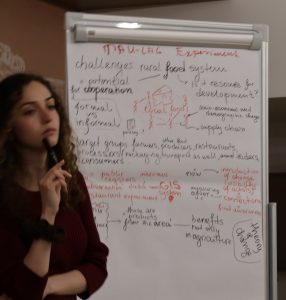
This meeting is a direct practical outcome of data experiment carried out under the RUSTIK project to improve short food supply chains in the region. In Sokobanja and Boljevac, researchers interviewed 37 restaurants, hotels, and rural tourism households, 29 agricultural holdings, and 12 small and medium-sized agri-food businesses. A key finding was that local products are insufficiently present in the tourist offering — a gap this partnership now directly begins to close.

“With today’s concrete agreements, we are creating the conditions for a stronger connection between tourism and agriculture.” — RARIS / RUSTIK project team.

RUSTIK & GRANULAR Final Conference

CHECK THE AGENDA


The GRANULAR and RUSTIK projects are pleased to invite you to their joint Final Conference, taking place on 24–25 June 2026 at Fondation Universitaire in Brussels, Belgium.

Objectives

  • Present and discuss the key results of the GRANULAR and RUSTIK Horizon Europe projects.
  • Showcase the tools and policy recommendations developed over the past four years.
  • Share insights and experiences from the GRANULAR and RUSTIK Multi-Actor Labs / Living Labs.
  • Facilitate exchange and networking among stakeholders working on rural development and innovation.

Programme Overview

Day 1 – 24 June (13:30–18:00)
Focus on the main research findings and outputs from both projects, including local perspectives and contributions from external speakers.
The day will conclude with a networking drink.

Day 2 – 25 June (09:00–14:00)
Explore future perspectives for rural policies and present practical, on-the-ground experiences based on the projects’ impact.
The conference will close with a networking lunch.

Who should attend?

This two-day event will bring together project partners, policymakers, practitioners, and rural stakeholders interested in rural development and innovation.

Important information

Please note that participants are responsible for covering their own travel, accommodation, and subsistence costs.

Heading to Brussels? Find everything you need to plan your trip in our Participants toolkit.

Event details

  • Location: Fondation Universitaire (Rue d’Egmont 11, 1000 Brussels, Belgium)
  • Dates: 24–25 June 2026
  • Language: English


CHECK THE AGENDA

*Registration is now closed!

Save the Date: RUSTIK & GRANULAR Final Conference

The RUSTIK and GRANULAR projects will hold their joint Final Conference on 24–25 June 2026 at Fondation Universitaire in Brussels, Belgium.

The two-day event will bring together project partners, policymakers, practitioners and rural stakeholders to share key results and discuss future perspectives for rural development and innovation.

On the first day (24 June, 13:30–18:00), the programme will focus on presenting the main research outputs from both projects, including local perspectives and contributions from external speakers. The session will conclude with a networking drink.

The second day (25 June, 09:00–14:00) will look ahead to the future of rural policies and highlight practical, on-the-ground experiences based on the two projects impact. The conference will close with a networking lunch.

More information, including registration details and the full agenda, will be available soon. Stay tuned!

Living Labs in Action: creating sustainable rural futures through new data and tools

The UK RUSTIK Regional Dissemination Event, held on 20 November 2025 at the historic Blackfriars Priory in Gloucester, brought together around 40 participants representing research, local government, community organisations, and policy. Titled “Creating Sustainable Rural Futures through New Data and Tools,” the half-day workshop explored how innovative data approaches and participatory mapping can inform more resilient and inclusive rural strategies.


Opening and Context

The event opened with welcoming remarks from Professor Matthew Reed, Director of the Countryside and Community Research Institute (CCRI) and Head of Research at the University of Gloucestershire. His introduction set the tone for an afternoon focused on rural sustainability, grounded in both regional experience and wider European collaborations.

Participants then received updates from the UK Living Labs across the RUSTIK and GRANULAR projects. Speakers included Daniel Keech and Katarina Kubinakova (Gloucestershire Living Lab), Aimee Morse (Monmouthshire Living Lab), Demelza Jones (Monmouthshire County Council), and Jonathan Hopkins (James Hutton Institute, GRANULAR Scotland Living Lab).


Insights from the Living Labs


1. Monmouthshire Living Lab – Understanding demographic change

Aimee Morse and Demelza Jones presented a data experiment on demographic change implemented as part of the Living Lab, exploring ways to achieve better demographic balance by retaining and attracting younger working-aged people to live and work in the county. Their three-step approach included:

  1. Developing a prototype dashboard, using Welsh Index of Multiple Deprivation data and satellite imagery.
  2. Gathering new data with Maptionnaire, targeting residents aged 16–44 to address gaps in existing datasets. Several interviews and focus groups were conducted to complement the survey.
  3. Analysing results to support local planning and decision-making.

Key issues affecting liveability for younger residents included high housing and living costs, limited educational and employment opportunities, public transport constraints, and a lack of social, leisure, or retail options. Positive comments highlighted green spaces, access to the countryside, and a peaceful, safe environment.

The findings provide Monmouthshire County Council with a baseline dataset on a group they previously had little information about, offering granular insights that can support decisions where “official statistics flatten local rural variations.”

Next steps include linking findings with the UKRI-funded Rural Wales Local Policy and Innovation Partnership, contributing to the Well-being of Future Generations Act regional wellbeing assessment, and undertaking deeper research on the public transport needs of younger working-age residents.


2. GRANULAR Scotland – New rural data for policy

From the James Hutton Institute, Jonathan Hopkins presented work from the GRANULAR project’s Scottish Living Lab. With 24 partners, 7 Living Labs, and 9 replication labs, GRANULAR focuses on generating spatially detailed rural knowledge.

Hopkins discussed research on:

  • Drivers of rural wellbeing advantages in Great Britain.
  • Daily mobility patterns and accessibility.
  • Rural proofing in collaboration with Ecorys.

The team confirmed the “rural wellbeing advantage”, a paradox where rural areas report higher subjective wellbeing despite reduced access to services—using a broad suite of geographic, socioeconomic, and environmental variables.


3. Gloucestershire Living Lab – Digital inclusion and data innovation

The Gloucestershire Living Lab team, represented by Daniel Keech and Katarina Kubinakova, presented work on digital transition challenges in the county’s four rural districts (additionally, there are two mainly urban districts in the county). Partnering with community-sector providers, a smart dashboard was developed by the University of Gloucestershire team enabling users (predominantly voluntary sector organisations) to import datasets, clean data, and perform analyses based on geographical levels. The dashboard also supports cross-reference analysis across different datasets and includes heat-map visualisation for both numerical and categorical data.

The Gloucestershire LL team also briefly presented some preliminary findings from their recent online survey linked to decentralised rural proofing of the DIIIS.  The survey shows that most digital support is directed towards vulnerable people, and that organisations targeting rural areas consistently report greater difficulty due to resource constraints and a rapidly changing public-service environment.

A key takeaway: fine-grain data doesn’t always inform policy, but the dashboard marks a significant improvement in rural data analysis, though its success also depends on social innovation and clearer strategic direction for rural digital transformation.


Panel: Mapping Tools for Policy and Engagement

A panel discussion chaired by Demelza Jones brought together:

The panel explored how mapping tools, participatory surveys, creative place-based methods, and continuous community dialogue can strengthen evidence-based policy. Scott Orford showcased work using poetry, videos, storytelling, and open-street mappers to mobilise community insights. Asta Hiippala highlighted the importance of ongoing dialogue rather than one-off extraction of data, noting how some cities, such as Helsinki, publish anonymised results openly to encourage transparency.

After the break, lightning talks provided additional examples of how local data can support rural policy development and informed the day’s final activity: group discussions.


Rural Wales Local Policy and Innovation Partnership – Strengthening evidence for policy

The Rural Wales LPIP‘s work on building a wellbeing economy for rural Wales, with a focus on inclusive and sustainable growth was presented by Matthew Reed, on behalf of Professor Michael Woods (Aberystwyth University) and Scott Orford.

The projects approach includes:

  • Strengthening the evidence base for rural policymaking.
  • Community-led action research, enabling communities to identify local issues, design research, and use evidence.
  • A new LPIP data hub, designed to support stakeholders across rural Wales.

This work complements that of the RUSTIK Living Labs by expanding data access and improving regional policymaking capacity.


Closing remarks

The afternoon concluded with group discussions and a plenary session led by the RUSTIK UK team, summarising key takeaways on how local data, community-driven engagement, and fine-grained analysis can contribute to more resilient rural futures.

Building on earlier RUSTIK workshops in Galicia and Finland, the UK event reinforced the importance of collaboration, knowledge exchange, and adaptive, data-informed strategies in navigating demographic, digital, and environmental transitions.

RUSTIK Regional Dissemination Event in the UK: Creating Sustainable Rural Futures Through Data and Tools

The RUSTIK Regional Dissemination Event in the UK will take place on Thursday, 20 November 2025, from 13:00 to 16:30 GMT at the historic Blackfriars Priory in Gloucester.

This half-day event, titled “Creating Sustainable Rural Futures through New Data and Tools,” will bring together researchers, policymakers, practitioners, and community leaders to explore how innovative data approaches and participatory mapping can inform more resilient and inclusive rural strategies.


Event Highlights

The afternoon will open with a welcome and introduction by Professor Matthew Reed, Director of the Countryside and Community Research Institute (CCRI) and Head of Research at the University of Gloucestershire. His remarks will set the tone for a dynamic discussion on rural sustainability, grounded in regional and European perspectives.

Participants will then hear an overview of work from the UK Living Labs, presented by the RUSTIK and GRANULAR project teams. Confirmed speakers include:

A panel discussion will follow, exploring the role of spatial data and mapping tools in strengthening community engagement and shaping effective local policy.
Panellists include:

After a short coffee break, a series of lightning talks will highlight innovative approaches to using local data in rural policy development. Presenters include Michael Woods (Aberystwyth University) and Scott Orford (Cardiff University).

The afternoon will continue with facilitated group discussions, inviting participants to share their insights and ideas on the future use of local data for sustainable rural policies. The event will close with a plenary session, gathering key takeaways and reflections, led by the RUSTIK UK team.


Why Attend

This event offers a valuable platform to:

  • Discover how data-driven tools and participatory methods are reshaping rural development.
  • Exchange knowledge and experiences across research, policy, and practice.
  • Contribute to ongoing discussions on evidence-based, locally grounded strategies for rural sustainability.

Attendees can expect lively debate, hands-on insights, and new connections to support rural innovation in the UK and across Europe.


Building on Previous Regional Workshops

This UK dissemination event builds on the success of previous RUSTIK regional workshops, including recent sessions in Galicia, which focused on multi-actor approaches to rural sustainability, and earlier discussions on innovative responses to rural demographic shifts, in Finland.

Together, these events highlight the growing importance of collaboration, knowledge exchange, and adaptive, data-informed strategies in shaping the future of rural regions.


Check the AGENDA!


RUSTIK Project Meeting in Cheltenham: Advancing Insights for Europe’s Rural Future

The upcoming RUSTIK project meeting in Cheltenham, UK, will bring together partners from across Europe to advance the project’s understanding of rural transformation. The main focus of the meeting will lie in the thematic workshops established as part of Work Package 5 (WP5): Refined Understanding of Rural Dynamics, Impact Assessment, and Conclusions.

These workshops represent a key step in connecting findings from across RUSTIK’s Living Labs, refining insights, and co-developing recommendations that can strengthen the resilience and sustainability of Europe’s rural regions.

Each thematic workshop will bring together a dedicated group of Living Labs, each assigned based on their core expertise and regional context.

Core Themes of the Cheltenham Workshops
  1. Socio-economic vitality and rural businesses
    Discussions will explore strategies to reinforce rural business ecosystems, enhance local innovation, and build socio-economic resilience in the face of ongoing transitions. For the “Socio-economic vitality – Strengthening Rural Businesses” workshop, the assigned Living Labs are Mazowieckie and Świętokrzyskie in Poland,  and Nockregion – Oberkärnten, Austria, each known for proactive support of rural enterprises and rural economic development.
  1. Environmental and institutional transition
    Sessions will focus on climate adaptation, sustainable resource management, and the role of data-driven development in supporting greener and smarter rural futures. The Environmental and Institutional Transition – Land Use, Natural Resources & Data Tools workshop will feature the Living Labs from Parma, Piacenza & Ferrara (Italy), Galicia (Spain), Osona (Spain), and Gloucestershire (United Kingdom) as the main contributors. These regions are recognized for pioneering efforts in landscape management, innovative data usage, and integrated territorial governance.
  1. Sustainable food and forestry systems
    Participants will share best practices and explore collaborative approaches for ensuring robust, sustainable food production and forestry management. For the Socio-economic Vitality – Sustainable Food/Forestry Systems workshop, the assigned Living Labs are Troyan-Apriltsi-Ugаrchin (Bulgaria), Garfagnana (Italy), and Zaječar District (Serbia). Each of these regions brings significant experience in enhancing rural food production systems, supporting agri-food value chains, and promoting forestry innovation.
  1. Social cohesion and inclusion
    Workshops will address how to foster equality, social inclusion, and thriving communities as essential pillars of sustainable rural development. The Social Cohesion – Stimulating Social Inclusion workshop will be led by the Living Labs from Rhein-Hunsrück (Germany), Osrednjeslovenska regija (Central Slovenia), North Karelia (Finland), and Monmouthshire (United Kingdom). These regions each bring extensive experience in fostering inclusive rural communities, developing vibrant networks, and supporting diverse social initiatives.

These discussions build on the foundations of WP1 Conceptualising functional rural areas, transition and resilience of rural areas and the latest findings from 14 Living Labs, with the aim of synthesizing key lessons and translating them into concrete recommendations for rural policy and practice. The workshops are part of Task 5.1, led by BAB, in close collaboration with partners and Living Lab teams.

Beyond the Workshops: A Rich Programme of Activities

While the workshops form the heart of the meeting, several complementary activities will offer valuable opportunities for learning, reflection, and collaboration.

  • Work Package Coordination Meetings: Dedicated sessions for WP and task leads will support strategic alignment and ensure coherence across the project’s workstreams.
  • Site Visits to Gloucestershire and Monmouthshire: Participants will have the chance to visit these two Living Lab regions, gaining first-hand insights into local rural dynamics, challenges, and innovative practices driving regional transformation.

The outcomes of the Cheltenham meeting will play a crucial role in shaping RUSTIK’s scientific outputs and final European-wide seminar. Insights gained will inform transition pathways and generate actionable recommendations for strengthening rural resilience, sustainability, and inclusion across Europe.

As the RUSTIK community gathers in Cheltenham, this meeting promises to be a catalyst for collaboration — advancing shared understanding and contributing to the vibrant future of Europe’s rural regions.

Rural Proofing in Action: Making Policies Work for Rural Areas through Data and Earth Observation

Tuesday, 14 October 2025 |  16:00–17:30 CET | SQUARE Brussels, Rooms 213–215

As part of this year’s EU Regions Week, join us in Brussels for a high-level, interactive session on “Rural Proofing: Making Policies Work for Rural Areas through Data and Earth Observation.” This session will explore how innovative tools, Earth observation, and data-driven approaches can help tailor policies that leave no rural territory behind.

Hosted in collaboration with the GRANULAR, VALORADA, and RUSTIK projects, this event will highlight practical solutions to territorial challenges and examine how rural proofing can be better integrated into multi-level governance and policy development.

What to Expect

The session kicks off with a panel discussion featuring experts from the European Commission, OECD, and local and regional governments. They will share insights into how rural proofing is being applied across different levels of governance and how coordinated efforts can ensure fairer, more inclusive policy outcomes.

Following the panel, participants will take part in interactive peer-review discussions, engaging directly with initiatives from the GRANULAR, VALORADA, and RUSTIK projects. These real-world examples show how rural proofing has been applied to support rural communities and make policies more responsive to local needs.

It will be the opportunity to hear from two of RUSTIK living labs, with Petri Kahila, researcher at the University of eastern Finland and Karelian institute, and Francesco Mantino from the council for agricultural research and economics (CREA).

Why Attend?
  • Learn from EU and international rural policy experts.
  • Engage with cutting-edge research and projects using data and Earth observation.
  • Network with policymakers, researchers, and local leaders.
  • Contribute to shaping smarter, fairer rural development strategies.
Featured Speakers
  • Alexia Rouby – Administrator, European Commission.
  • Betty-Ann Bryce – Policy Expert, OECD.
  • Christos Moutsios – Secretary-General, Region of Central Greece.
Moderator:
  • Jack van der Hoek – Mayor, Municipality of Schouwen-Duiveland.
 Practical Details
  • Session Title: Rural Proofing: Making Policies Work for Rural Areas through Data and Earth Observation.
  • Date & Time: Tuesday, 14 October 2025 | 16:00–17:30 CET.
  • Location: Square Brussels, Rooms 213–215.
  • Format: Interactive session.
  • Language: English.
  • Theme: The Right to Stay: Unlocking the Potential of Every Territory.

Registration: Session Full – Check the EU Regions Week platform for updates

This session aligns with the European Commission’s long-term vision for rural areas and reinforces the right of all citizens to live, work, and thrive in the territory of their choice.

We look forward to welcoming you to a vibrant exchange of ideas and practices that can truly make a difference in rural policy.